
Supporting an autistic child can feel overwhelming, especially when behavior becomes challenging. Many parents find themselves asking: What actually works? How do I help my child stay calm?
The answer isn’t a single technique or quick fix. The most effective approach is behavioral: understanding why behavior is happening, then consistently teaching skills that help your child respond differently over time.
Start with the function of behavior
At its core, behavior is communication. When a child is overwhelmed, frustrated, or unable to express a need, behavior fills the gap. Instead of asking, “How do I stop this behavior?” shift to, “What is this behavior achieving for my child?”
In behavioral terms, every behavior serves a function, such as to:
- Gain attention
- Escape or avoid something
- Access a preferred item or activity
- Regulate sensory input
Understanding this is what makes effective intervention possible. Without it, even well-intentioned strategies can miss the mark.
Build proactive structure (before behavior escalates)
One of the most powerful behavioral strategies is predictability. When a child knows what to expect, their need to use behavior to cope decreases. Structure reduces uncertainty, and uncertainty is a major trigger for many children. Effective tools include:
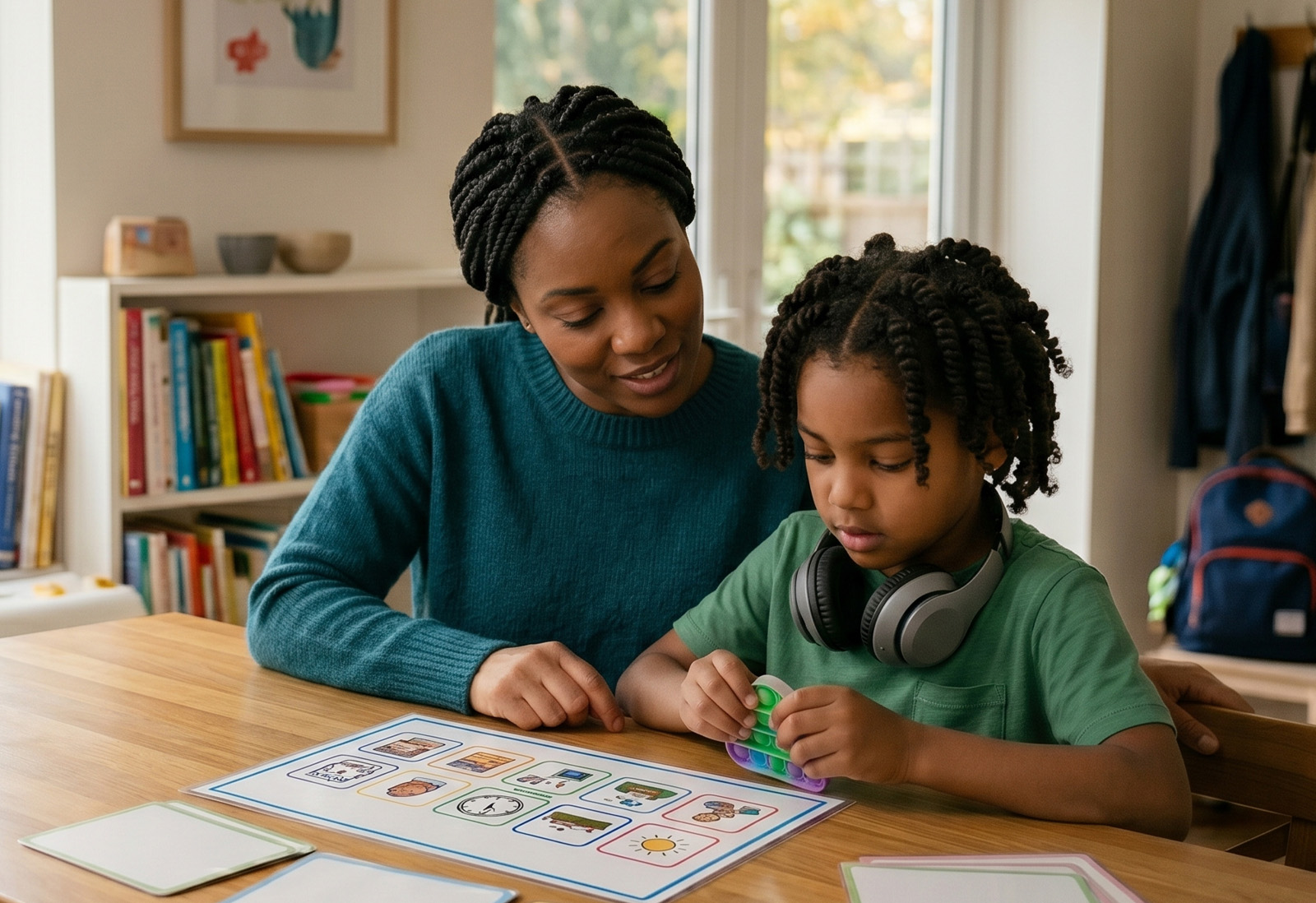
- Visual schedules that map out the day
- Timers to signal transitions
- Clear, simple instructions broken into steps
Transitions are a common challenge, so treat them proactively.
- Give advance warnings (“5 more minutes”)
- Use countdowns or visual timers
- Pair transitions with something positive when possible
These are not just supports; they’re behavioral interventions that reduce the likelihood of trouble before it starts.
Reinforce the behaviors you want to see
Behavior that is reinforced is more likely to happen again. This is one of the most well-established principles in Applied Behavior Analysis. That means the most effective way to change behavior is not by focusing on what’s going wrong, but by consistently reinforcing what’s going right. To make reinforcement effective:
- Be immediate (right after the behavior)
- Be specific (“You stayed calm when it was time to stop playing”)
- Be meaningful to your child (praise, attention, small rewards)
Over time, those positive behaviors become more consistent and independent.
Teach replacement skills (not just compliance)
Challenging behavior doesn’t go away unless a child has a better way to meet the same need. For example:
- Instead of yelling, teach how to request help
- Instead of running away, teach how to ask for a break
- Instead of shutting down, teach how to communicate “this is too hard”
This is called teaching replacement behaviors, and it’s one of the most important parts of any effective behavioral approach. The goal isn’t just to reduce behavior; it’s to build skills that make the behavior unnecessary.
Practice regulation skills when things are calm
Calming strategies are only effective if a child already knows how to use them. That’s why they need to be taught and practiced before they’re needed. Some effective, behaviorally grounded supports include:
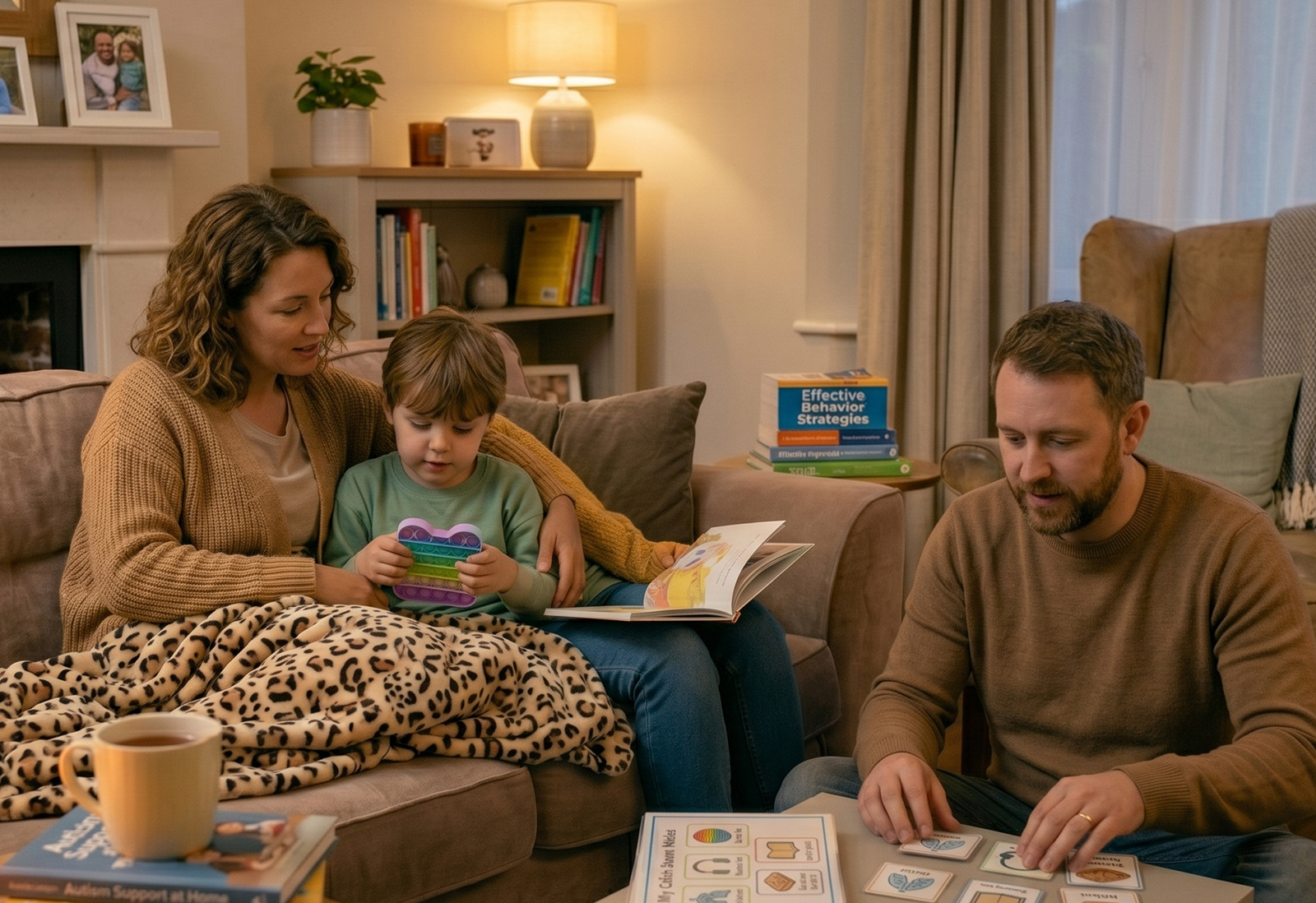
- Calm spaces: A designated, low-stimulation area your child can go to proactively
- Sensory tools: Fidgets, headphones, or other supports introduced before distress
- Simple breathing strategies: Visual, repeatable, and practiced regularly
- Movement breaks: Built into the day to prevent buildup of dysregulation
The key is consistency. These tools should be part of your child’s routine, not just a reaction to a meltdown.
Your response is part of the intervention
In behavioral terms, how you respond can either increase or decrease future behavior. During challenging moments:
- Stay as calm and neutral as possible
- Reduce language (short, clear directions)
- Avoid escalating the situation with urgency or frustration
Children co-regulate. Your calm helps de-escalate the moment and models regulation over time.
Create consistency across home and school
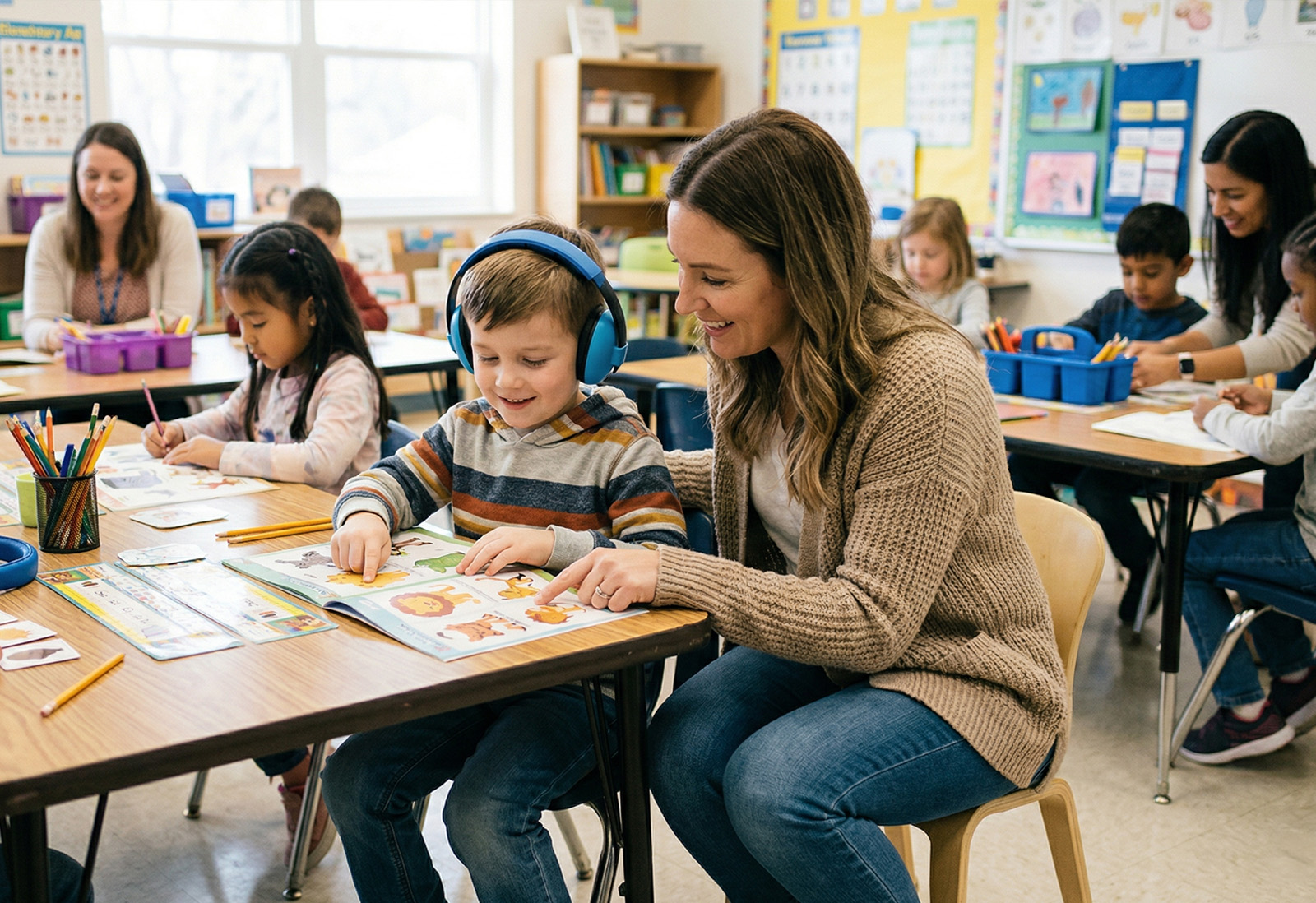
Behavior change happens faster when strategies are consistent across environments. Collaborate with your child’s school team to:
- Share what works at home
- Learn what’s effective in the classroom
- Align on expectations, language, and supports
When approaches are consistent, children experience less confusion and are more likely to succeed.
Focus on progress, not perfection
Behavioral change is gradual. Skills take time to build, and consistency matters more than intensity. Small wins like waiting a few extra seconds, using a new word, or transitioning with less resistance, are meaningful progress.
At its core, this work isn’t just about behavior. It’s about helping your child develop the skills they need to navigate their world with more confidence and less stress. And that starts with understanding, structure, and the right behavioral supports in place.