

If you’ve ever watched your child spiral into a meltdown and felt completely helpless, you’re not alone. There’s no single answer that works for every child, but there are evidence-based strategies that parents and clinicians have found helpful again and again.
What helps autistic kids stay calm?
Calm isn’t an automatic state for autistic children; it’s something that’s built into their environment, their routines, and the way the people around them respond.
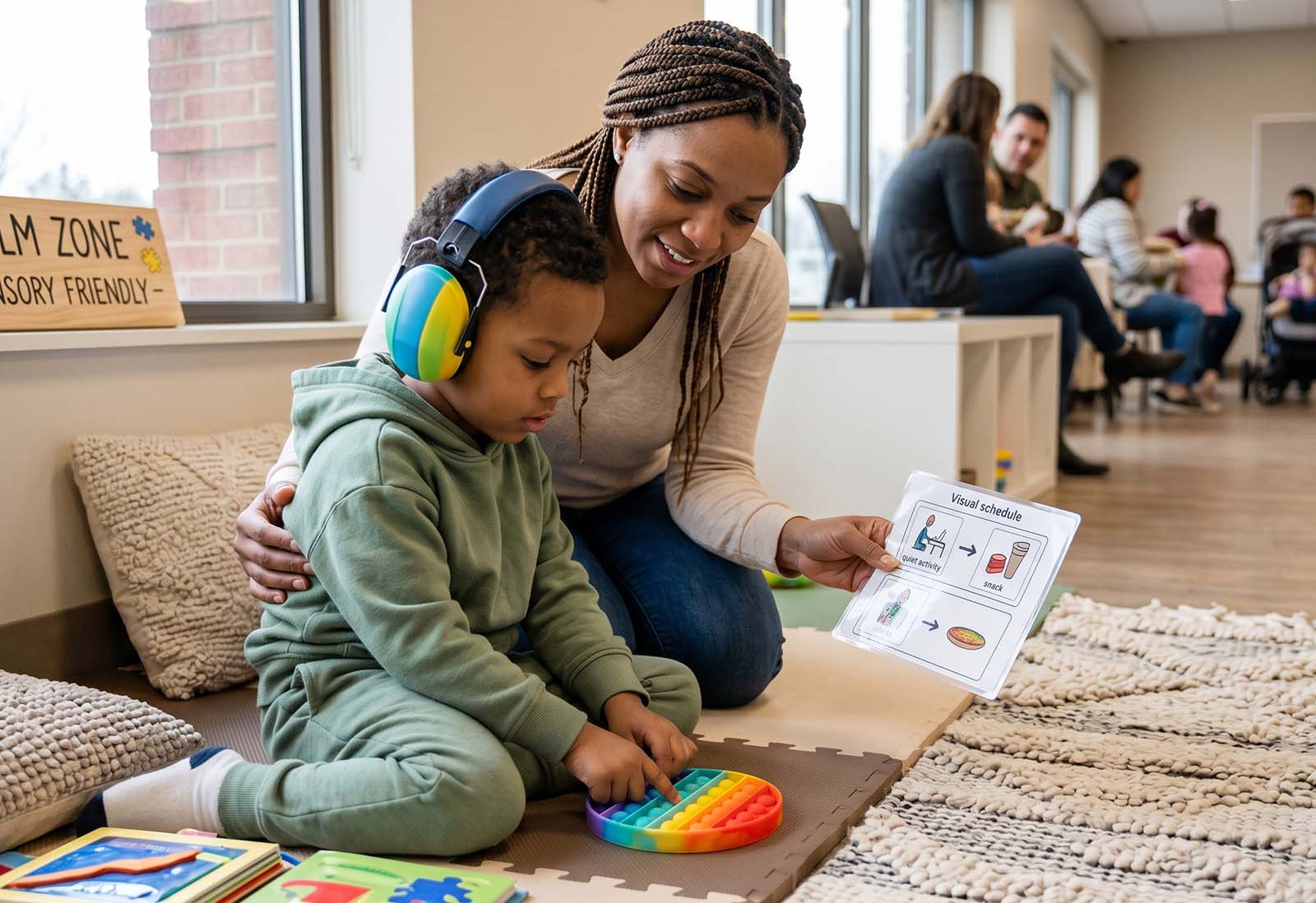
Predictability and structure make a significant difference. Many autistic children experience anxiety when they don’t know what comes next. Consistent daily routines, visual schedules, and advance warning before transitions can dramatically reduce baseline stress.
Sensory accommodations are equally important. Noise-canceling headphones, softer lighting, weighted blankets, and designated quiet spaces give children a place to regulate when the world gets too loud. Pay attention to what your child’s environment sounds, feels, and looks like.
Your own regulated, steady presence is one of the most powerful tools you have. Before you can help your child calm down, you may need to calm yourself first: children co-regulate before they can self-regulate.
Finally, learn your child’s personal regulation toolkit. For some it’s deep pressure, for others it’s movement like swinging or rocking, and for others it’s specific sounds or textures. This knowledge is worth more than any generic list of tips.
How do you parent a child with high-functioning autism?
“High-functioning” autism comes with its own unique challenges that can be easy to overlook precisely because the child appears to be managing well. They may be verbal, academically capable, and socially motivated but still struggling enormously beneath the surface.
Take the invisible struggles seriously. Children with high-functioning autism often expend enormous energy masking–suppressing autistic traits to fit in socially. By the time they get home, they may be completely depleted. The after-school meltdown is real.
Teach explicitly what others learn implicitly. Social rules, unwritten norms, the concept of reading the room, these don’t come naturally to many autistic children. Rather than expecting them to pick these things up organically, name them directly and practice them together.
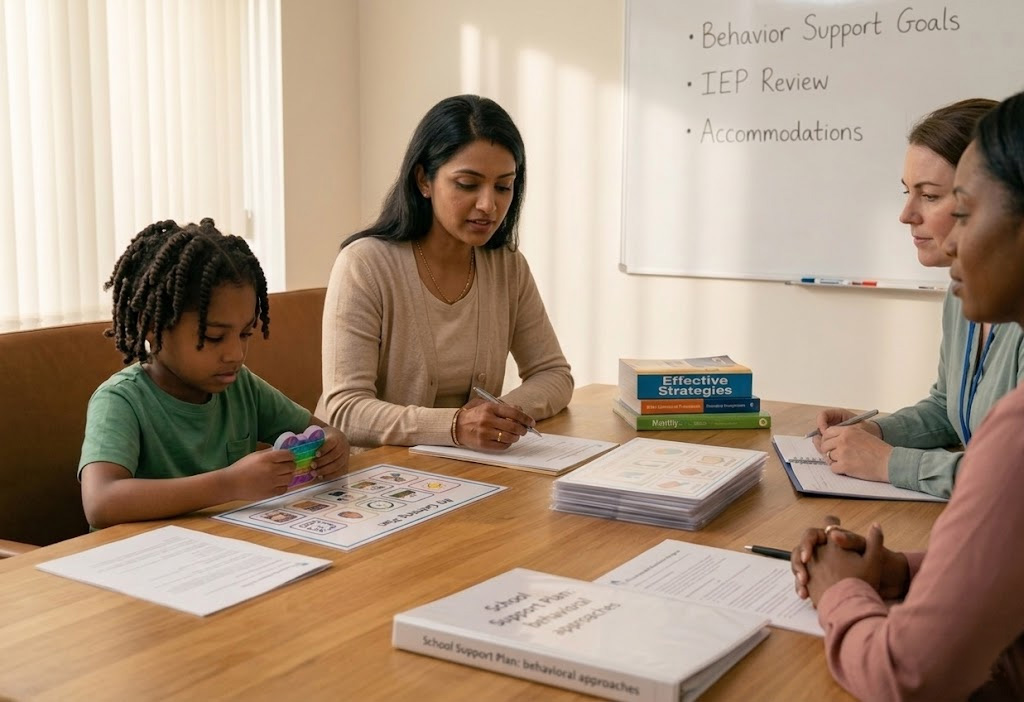
A 504 plan or IEP can also provide accommodations that make a huge difference: extended time, quiet testing environments, movement breaks. You know your child better than anyone in that building. Advocate for them.
And celebrate neurodivergent strengths. Deep focus, intense interests, honesty, pattern recognition, these are genuine gifts. Make sure your child hears that the way their brain works is valuable, not just different.
How do I support a severely autistic child?
Parenting a child with high support needs is one of the most demanding experiences a person can face. The physical demands, the emotional weight, the impact on your marriage, your career, your sleep… it’s real, and it’s heavy. Coping is a requirement.
Many parents describe grieving the future they imagined for their child. That grief is valid. Acknowledging it doesn’t mean you love your child any less; it means you’re human. Isolation makes everything harder, so finding your people matters: parent support groups connect you with people who understand in a way that even close friends often can’t.
Respite is a necessity. Taking breaks makes you a better caregiver. You cannot pour from an empty cup.
A Board Certified Behavior Analyst (BCBA) can work with your family to develop individualized behavior support plans tailored specifically to your child’s triggers, communication style, and strengths. And don’t overlook your own mental health: caregiver burnout, depression, and anxiety are significantly more common among parents of autistic children. Seeing a therapist is essential.
What are the 6 stages of an autism meltdown?
Understanding the structure of a meltdown can help you intervene earlier, or at least respond more effectively in the moment. While every child is different, clinicians and caregivers often describe meltdowns unfolding in roughly six stages.
1. The calm stage
This is baseline. Your child is regulated and not showing signs of distress. This is the ideal time to build skills and practice coping strategies. Prevention happens here, not during a meltdown.
2. The trigger stage
Something disrupts the calm: a sensory input, an unexpected change, a frustration, a demand. The trigger isn’t always obvious to observers, and it doesn’t need to be “big” to be significant. For a child who is already depleted, small triggers can have big effects.
3. The agitation stage
Early warning signs begin to appear: fidgeting, pacing, increasing vocal volume, repetitive behaviors, or withdrawal. The child is dysregulated but may still be reachable. This is the best window for intervention like a calm voice, a sensory break, removing the stressor, or a familiar coping tool.
4. The acceleration stage
Distress is intensifying and the window for de-escalation is narrowing. The child may become louder, more physical, or more distressed. At this stage, reasoning and problem-solving are not effective. Your goal is safety and reduced stimulation, not compliance.
5. The peak stage
This is the meltdown itself, the moment of maximum intensity. The child has lost voluntary control and is in a state of neurological overwhelm. This is not a tantrum, and it is not chosen. The most important thing you can do is ensure physical safety, reduce sensory input, and remain as calm as possible. Do not attempt discipline, negotiation, or instruction.
6. The recovery stage
The meltdown is subsiding, but the child is not back to normal. They are exhausted, often confused, sometimes remorseful. Approach gently, offer comfort, and avoid any discussion of consequences or what went wrong. Full recovery can take minutes, hours, or the rest of the day.
Raising an autistic child is a marathon. If you’re feeling overwhelmed or unsure where to begin, connecting with a qualified clinician–a BCBA, developmental pediatrician, or clinical psychologist specializing in autism–can help you build a plan designed specifically for your child and family.